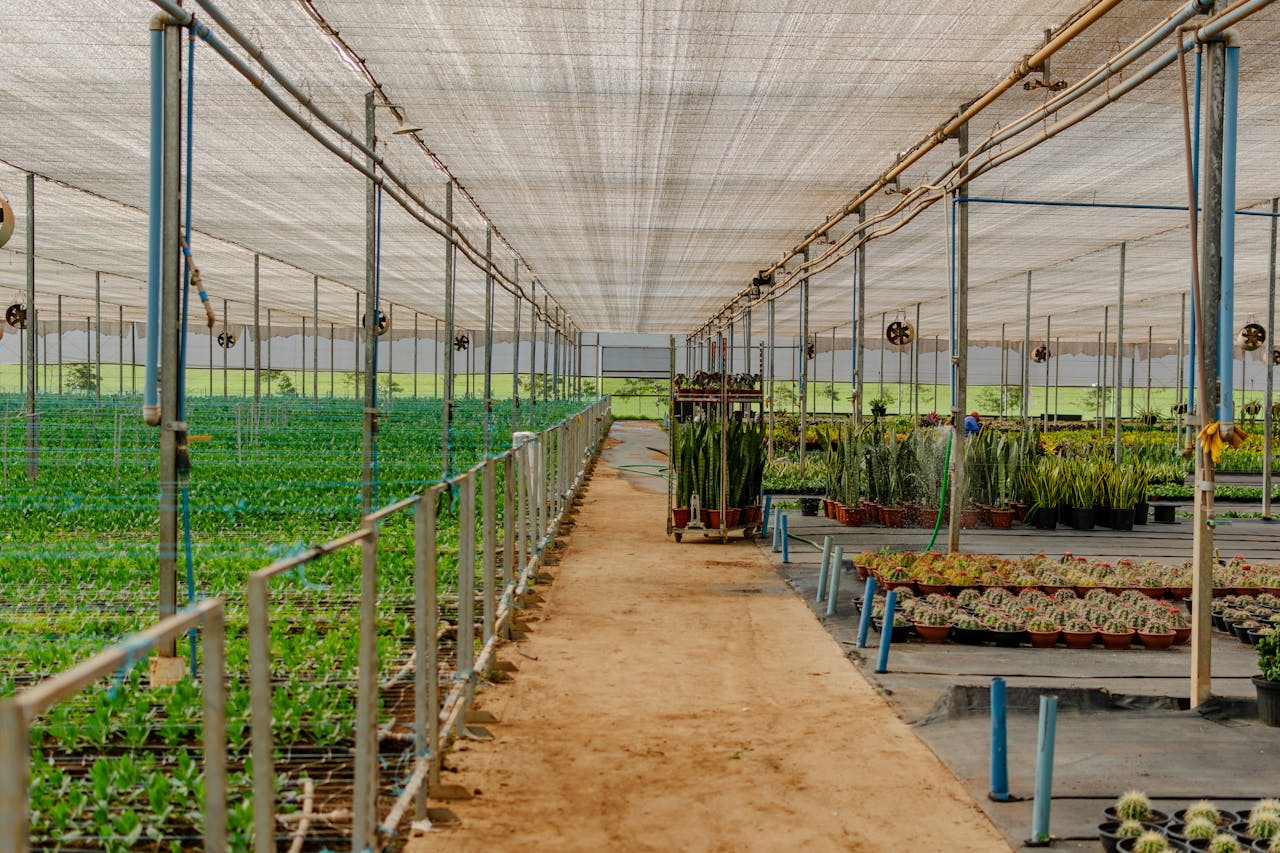
Most greenhouse operations that monitor dissolved oxygen do so at one point — typically somewhere near the mix tank or header. It seems logical: control what you can control, measure where you dose. But in a closed-loop drip system with a single oxygenation point at the lagoon inlet and 100 metres or more of pipe between injection and the furthest drippers, a single sensor creates a fundamental blind spot.
The injector is at one end. The roots are at the other. Everything that happens between those two points — temperature-driven decay, biofilm oxygen consumption, tank transit losses, emitter turbulence — is invisible to a controller watching only one of them.
This article describes a two-sensor architecture that closes this gap: one sensor at the lagoon outlet (just after the injector) controlling injection on/off, and one at the drippers providing slow integrating feedback to adapt the lagoon setpoint over time.