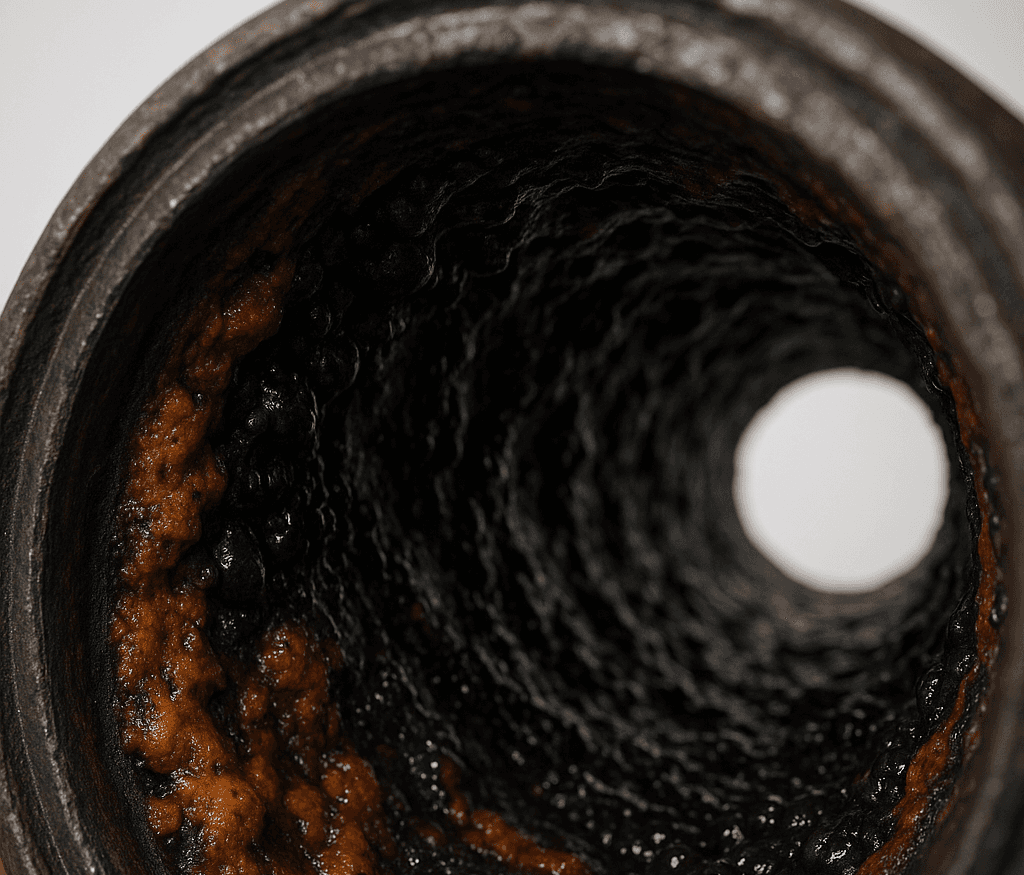
Wie entferne ich Biofilm? Aktuelle Methoden zur Biofilm-Entfernung und ihre Einschränkungen
geschrieben von
Produktmanager mit einem Schwerpunkt auf Maschinenbau, der Systeme entwirft und Produkt, Produktion und Betrieb miteinander verbindet, um maximale Wirkung zu erzielen. Außerhalb des Büros bin ich ein leidenschaftlicher Kletterer, ehemaliger Wettkämpfer und trainiere und setze weiterhin Routen in meiner Freizeit.
Abonnieren Sie unseren monatlichen Wasser-Newsletter
Wir könnten Ihnen eine E-Mail senden, wenn wir etwas Nachrichtenwürdiges haben, verfasst von unseren Wasserprofis
Biofilms are 10 to 1,000 times more resistant to antibiotics and disinfectants than free-floating (planktonic) bacteria, depending on the species and treatment involved (Mah & O'Toole, Trends in Microbiology, 2001). Their dense extracellular matrix acts as a physical and chemical barrier, shielding the inner microbial community from external threats. Bacteria within biofilms also communicate through quorum sensing — coordinating behavior to reinforce defenses — and can enter dormant states that further reduce their susceptibility to treatment.
This combination of structural protection, collective behavior, and metabolic flexibility is what makes biofilm eradication genuinely difficult, and why no single method works universally.
Current Biofilm Control Methods
1. Mechanical Removal
Scrubbing, brushing, ultrasonic agitation, and high-pressure water jets are among the most direct approaches to physically disrupting biofilm on hard surfaces. These techniques are widely used in food processing facilities, wastewater treatment plants, and industrial pipelines.
Limitations:
Labor- and time-intensive at scale
Rarely eliminates microbial colonies entirely; regrowth is common
High-pressure or abrasive methods can damage sensitive equipment or surfaces
Inaccessible geometries (e.g., pipe interiors, catheter lumens, drip-irrigation emitters) are difficult to reach
2. Chemical Disinfectants
Chlorine-based compounds, hydrogen peroxide, quaternary ammonium compounds (QACs), and enzymatic cleaners are the workhorses of biofilm control in medical, food and beverage processing, and industrial settings.
Limitations:
Biofilm matrices can neutralize or sequester disinfectants before they reach inner cell layers
Repeated exposure at sub-lethal concentrations may select for tolerant or resistant strains
Some agents pose risks to human health, aquatic life, or the environment at effective concentrations — a real constraint in live aquaculture systems
Deeply embedded biofilms on porous surfaces often survive even aggressive chemical treatment
3. Antibiotic Treatments
In clinical settings, antibiotics remain the primary response to biofilm-associated infections — particularly those involving implanted devices such as catheters, prosthetic joints, and cardiac valves. This method is not applicable to open water systems and is included here for completeness of the biofilm-resistance picture above.
Limitations:
Poor penetration into the biofilm matrix limits therapeutic efficacy
Persistent and dormant "persister" cells survive antibiotic exposure and seed regrowth
Overuse contributes directly to the global antibiotic resistance crisis
Antibiotics treat infection but do not prevent biofilm reformation on device surfaces
4. Natural and Enzymatic Approaches
Enzymes (such as DNase, dispersin B, and proteinase K) and plant-derived antimicrobials (including essential oils, polyphenols, and quorum-sensing inhibitors) are gaining interest as gentler, more targeted alternatives — particularly in food safety and consumer product applications.
Limitations:
Efficacy is highly variable depending on biofilm species composition and maturity
Many natural agents act more slowly than synthetic disinfectants
Stability and shelf-life can be challenging to maintain in commercial formulations
Regulatory pathways for novel bioactive agents can be lengthy
Emerging Technology: Nanobubbles
Nanobubbles are ultra-small gas bubbles — typically under 200 nanometres in diameter — suspended in liquid. Their extraordinarily small size gives them physical and chemical properties that differ fundamentally from conventional bubbles, making them an intriguing tool for biofilm disruption in operating water systems. For the physics behind this, see how nanobubbles work.
How Nanobubbles Target Biofilm
Mechanism | Description |
|---|---|
Deep penetration | Nanoscale size allows infiltration of dense biofilm layers inaccessible to larger particles or bulk liquid flow |
Sustained oxidant delivery | Ozone or oxygen nanobubbles can deliver reactive oxygen species (ROS) into the biofilm matrix gradually over their extended lifetime, rather than all at once the way a larger bubble would |
Gradual dissolution | As nanobubbles slowly dissolve, they shift the local dissolved-gas concentration at the biofilm surface, affecting the microenvironment the biofilm depends on |
Extended stability | Unlike macrobubbles, nanobubbles resist rising and merging, prolonging contact time with the target surface |
Note on mechanism: nanobubble-driven biofilm disruption is generally attributed to the processes above rather than to violent bubble collapse or "micro-implosion" — that kind of shockwave effect is more associated with acoustic cavitation from ultrasound-driven microbubbles, a related but distinct process.
Why Nanobubbles Are Promising
Non-toxic and chemical-free — effective without the hazards associated with strong disinfectants, a meaningful advantage in live aquaculture and food-contact environments
Broad surface compatibility — applicable to medical devices, food processing equipment, irrigation systems, and more
Low environmental impact — leaves no harmful residues
Synergistic potential — can enhance the efficacy of existing disinfectants when used in combination
Waboost's nanobubble generators are built to deliver this kind of continuous, chemical-free treatment in operating tanks, ponds and pipework rather than as a one-off clean.
Choosing the Right Approach
No single method is universally effective. The best biofilm control strategy depends on the surface type, the microbial species involved, the operational environment, and the acceptable risk profile.
In aquaculture systems and irrigation networks in particular, chemical load and livestock or crop safety narrow the practical options further than in a purely industrial setting.
In practice, combination approaches — for example, mechanical pre-treatment followed by chemical disinfection or nanobubble exposure — tend to outperform any single intervention.
As resistance continues to grow and regulatory pressure on harsh chemicals increases, technologies like nanobubbles, enzymatic treatments, and quorum-sensing inhibitors represent a meaningful shift toward smarter, more targeted biofilm control.
FAQ
How quickly does biofilm regrow after cleaning?
Regrowth timelines vary widely by species, surface, and water conditions — there's no single figure that holds across systems.
Does chlorine fully kill biofilm?
Chlorine and other chemical disinfectants can kill exposed surface organisms, but the biofilm matrix itself often blocks the disinfectant from reaching cells deeper inside, so a single chlorine treatment rarely eliminates an established biofilm outright — see the Chemical Disinfectants limitations above.
Is biofilm actually harmful in aquaculture or irrigation systems, or just a nuisance?
Both. Beyond fouling equipment, biofilm can harbor pathogenic organisms and, in irrigation, progressively narrows emitters and reduces flow uniformity — so it's a water-quality and yield issue, not just a cleaning chore.
Can biofilm be prevented instead of just removed?
Reducing nutrient loading, maintaining flow (stagnant water favors biofilm formation), and continuous low-level treatment — such as ongoing nanobubble exposure — are more effective long-term than periodic cleaning alone, since biofilm re-establishes quickly on a bare surface.
Are nanobubbles safe for fish and plants?
The bubbles themselves introduce no added chemicals beyond the gas they carry (typically air, oxygen or ozone), which is why they're described as chemical-free relative to disinfectant-based methods.
Ozone nanobubbles are a reactive oxidant, though, and dosing still needs to respect safe thresholds for livestock or crops the same as any oxidant-based treatment.