Replacement Interval
Unlike membrane sensors, optical sensors:
Do not have electrolyte to refill
Do not require membrane replacement
However, they may have:
Optical sensing cap (luminophore coating)
Lifetime: 1–2 years typical
Depends on:
Ozone concentration levels
UV exposure
Fouling
Temperature
Gradual signal weakening indicates aging
O-rings / seals
Replace during maintenance if worn
Calibration Interval
Cleaning Interval

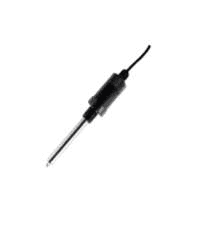
An optical dissolved ozone sensor measures the concentration of ozone dissolved in water using optical absorption or luminescence principles, rather than relying on chemical reactions.
It works by shining light through the water sample or onto a sensing layer sensitive to ozone. Ozone absorbs or affects specific wavelengths of light, and the sensor calculates the dissolved ozone concentration based on changes in light intensity or fluorescence.
Key advantages:
Fast and continuous measurement
High accuracy and sensitivity
Minimal maintenance (no chemical reagents needed)
Suitable for harsh or high-ozone environments
Common applications include water disinfection monitoring, wastewater treatment, aquaculture, and industrial process control.
Item | Specification |
|---|---|
Ozone Measuring range | 0.00 mg/L ~ 20.00 mg/L |
Ozone Resolution | 0.01 mg/L |
Ozone Accuracy | 5% FS |
Temperature Measuring range | -10.0 ~ 110.0 ℃ |
Temperature Resolution | 0.1 ℃ |
Temperature Accuracy | ± 0.5 ℃ |
Temperature type | Thermistor |
Temperature compensation | Manual / Auto |
RS485 output | MODBUS-RTU protocol |
Power supply | 9 ~ 27 VDC |
Isolation strength | 2500 Vrms |
Power | About 0.5 W |
Material | POM shell |
Installation | PG13.5 / 20×1.5 Thread |