written by

Subscribe to our monthly water newsletter
We might send you an email if we have something news worthy, written by our water professionals
1. The Basic Principle
Ambient air around us contains approximately:
78% nitrogen
21% oxygen
1% argon and trace gases
A PSA oxygen generator works by selectively removing nitrogen from compressed air, leaving concentrated oxygen.
The key component enabling this separation is the molecular sieve bed.
2. What Is a Molecular Sieve?
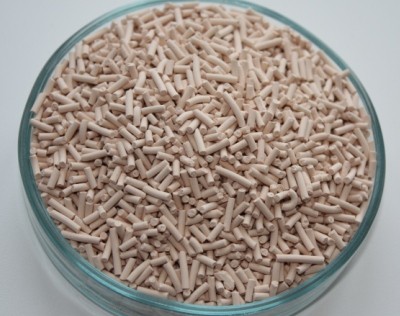
A molecular sieve is typically made of synthetic zeolite, a microporous aluminosilicate material.
It has:
Uniform microscopic pores
Extremely high surface area
Strong affinity for nitrogen molecules
The critical principle:
Zeolite adsorbs nitrogen more strongly than oxygen under pressure.
This is not filtration.
It is adsorption — gas molecules attach to the surface of the sieve material.
3. The PSA Cycle – Step by Step
A typical oxygen generator has two sieve beds operating alternately.
Step 1 – Air Compression
Ambient air is:
Filtered
Compressed (usually 4–10 bar)
Dried to remove moisture
Clean, dry compressed air enters one sieve bed.
Step 2 – Nitrogen Adsorption (Pressurization Phase)
Inside the pressurized sieve bed:
Nitrogen molecules are adsorbed onto the zeolite surface.
Oxygen molecules pass through.
Argon mostly passes with oxygen.
At the outlet, you get:
93–95% oxygen purity (industrial standard)
Step 3 – Oxygen Collection
The produced oxygen:
Flows into a buffer tank
Stabilizes pressure
Feeds downstream systems (e.g., nanobubble generator)
Step 4 – Depressurization (Regeneration Phase)
Once the sieve bed becomes saturated with nitrogen:
Pressure is rapidly released.
Nitrogen desorbs (detaches).
Nitrogen is vented to atmosphere.
The bed is now regenerated.
Step 5 – Alternating Beds (The “Swing”)
While Bed A is producing oxygen:
Bed B is regenerating.
After a few seconds:
The system switches.
Bed B produces oxygen.
Bed A regenerates.
This continuous switching is why it is called Pressure Swing Adsorption.
4. Why Two Beds Are Required
A single bed would require downtime for regeneration.
Two beds allow:
Continuous oxygen flow
Stable output
Reduced purity fluctuation
Advanced systems may use:
Equalization valves
Smart timing control
Flow smoothing tanks
For nanobubble generation, flow stability is extremely important to maintain consistent gas-liquid transfer efficiency.
5. Key Performance Parameters
1. Oxygen Purity
Typically 90–95%
Higher purity requires slower cycles or larger beds
2. Flow Rate
Measured in:
L/min
Nm³/h
3. Pressure
Common output:
3–6 bar
4. Dew Point
Moisture must be low.
Water vapor reduces sieve efficiency and lifespan.
6. What Determines Oxygen Quality Stability?
Several factors influence performance:
Sieve bed volume
Zeolite quality
Cycle timing
Compressor stability
Ambient temperature
Humidity
Poor design results in:
Purity fluctuations
Pressure instability
Reduced dissolved oxygen efficiency
For us, unstable oxygen supply can reduce:
Nanobubble concentration
DO supersaturation control
Oxidation consistency
Therefore maintaining a properly working oxygen generator is crucial to the mission.
7. PSA vs Cryogenic vs Membrane Oxygen
Technology | Purity | Scale | Cost | Typical Use |
|---|---|---|---|---|
PSA | 90–95% | Small–Medium | Moderate | On-site generation |
Cryogenic | 99%+ | Large | High | Industrial gas plants |
Membrane | 30–45% | Small | Low | Enrichment only |
For agriculture, aquaculture, and water treatment, PSA is the most cost-effective solution.
8. Why Oxygen Purity Matters in Nanobubble Systems
In dissolved oxygen applications:
Higher purity oxygen:
Increases oxygen transfer rate
Enables higher supersaturation
Improves biofilm oxidation
Enhances root zone oxygenation
For example:
Air-fed nanobubble systems are limited by 21% oxygen content.
PSA oxygen allows significantly higher DO concentrations.
Combined with nanobubbles, supersaturation up to 300–400% is achievable in controlled systems.
This directly improves:
Fish biomass density
Root oxygenation
Organic load oxidation
Water clarity
9. Maintenance of Sieve Beds
Zeolite lifespan is typically around 2 years (if air is properly filtered and dried)
Common failure causes:
High moisture
Dust ingress
Overheating
Preventive maintenance includes:
Dryer maintenance
Monitoring oxygen purity
Periodic valve inspection