lundi 2 mars 2026
How an Oxygen Generator with Sieve Beds Works
écrit par

Abonnez-vous à notre newsletter mensuelle sur l'eau
Nous pourrions vous envoyer un e-mail si nous avons quelque chose de digne d'intérêt, rédigé par nos professionnels de l'eau
1. The Basic Principle
Ambient air around us contains approximately:
78% nitrogen
21% oxygen
1% argon and trace gases
A PSA oxygen generator works by selectively removing nitrogen from compressed air, leaving concentrated oxygen.
The key component enabling this separation is the molecular sieve bed.
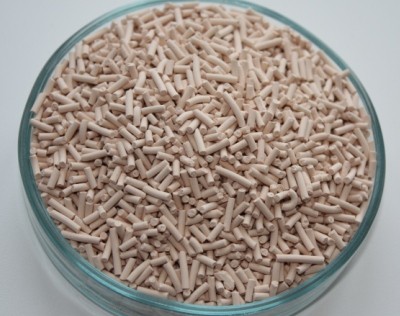
2. What Is a Molecular Sieve?
A molecular sieve is typically made of synthetic zeolite, a microporous aluminosilicate material.
It has:
Uniform microscopic pores
Extremely high surface area
Strong affinity for nitrogen molecules
The critical principle:
Zeolite adsorbs nitrogen more strongly than oxygen under pressure.
This is not filtration.
It is adsorption — gas molecules attach to the surface of the sieve material.
3. The PSA Cycle – Step by Step
A typical oxygen generator has two sieve beds operating alternately.
Step 1 – Air Compression
Ambient air is:
Filtered
Compressed (usually 4–10 bar)
Dried to remove moisture
Clean, dry compressed air enters one sieve bed.
Step 2 – Nitrogen Adsorption (Pressurization Phase)
Inside the pressurized sieve bed:
Nitrogen molecules are adsorbed onto the zeolite surface.
Oxygen molecules pass through.
Argon mostly passes with oxygen.
At the outlet, you get:
93–95% oxygen purity (industrial standard)
Step 3 – Oxygen Collection
The produced oxygen:
Flows into a buffer tank
Stabilizes pressure
Feeds downstream systems (e.g., nanobubble generator)
Step 4 – Depressurization (Regeneration Phase)
Once the sieve bed becomes saturated with nitrogen:
Pressure is rapidly released.
Nitrogen desorbs (detaches).
Nitrogen is vented to atmosphere.
The bed is now regenerated.
Step 5 – Alternating Beds (The “Swing”)
While Bed A is producing oxygen:
Bed B is regenerating.
After a few seconds:
The system switches.
Bed B produces oxygen.
Bed A regenerates.
This continuous switching is why it is called Pressure Swing Adsorption.
4. Why Two Beds Are Required
A single bed would require downtime for regeneration.
Two beds allow:
Continuous oxygen flow
Stable output
Reduced purity fluctuation
Advanced systems may use:
Equalization valves
Smart timing control
Flow smoothing tanks
For nanobubble generation, flow stability is extremely important to maintain consistent gas-liquid transfer efficiency.
5. Key Performance Parameters
1. Oxygen Purity
Typically 90–95%
Higher purity requires slower cycles or larger beds
2. Flow Rate
Measured in:
L/min
Nm³/h
3. Pressure
Common output:
3–6 bar
4. Dew Point
Moisture must be low.
Water vapor reduces sieve efficiency and lifespan.
6. What Determines Oxygen Quality Stability?
Several factors influence performance:
Sieve bed volume
Zeolite quality
Cycle timing
Compressor stability
Ambient temperature
Humidity
Poor design results in:
Purity fluctuations
Pressure instability
Reduced dissolved oxygen efficiency
For us, unstable oxygen supply can reduce:
Nanobubble concentration
DO supersaturation control
Oxidation consistency
Therefore maintaining a properly working oxygen generator is crucial to the mission.
7. PSA vs Cryogenic vs Membrane Oxygen
Technology | Purity | Scale | Cost | Typical Use |
|---|---|---|---|---|
PSA | 90–95% | Small–Medium | Moderate | On-site generation |
Cryogenic | 99%+ | Large | High | Industrial gas plants |
Membrane | 30–45% | Small | Low | Enrichment only |
For agriculture, aquaculture, and water treatment, PSA is the most cost-effective solution.
8. Why Oxygen Purity Matters in Nanobubble Systems
In dissolved oxygen applications:
Higher purity oxygen:
Increases oxygen transfer rate
Enables higher supersaturation
Improves biofilm oxidation
Enhances root zone oxygenation
For example:
Air-fed nanobubble systems are limited by 21% oxygen content.
PSA oxygen allows significantly higher DO concentrations.
Combined with nanobubbles, supersaturation up to 300–400% is achievable in controlled systems.
This directly improves:
Fish biomass density
Root oxygenation
Organic load oxidation
Water clarity
9. Maintenance of Sieve Beds
Zeolite lifespan is typically around 2 years (if air is properly filtered and dried)
Common failure causes:
High moisture
Dust ingress
Overheating
Preventive maintenance includes:
Dryer maintenance
Monitoring oxygen purity
Periodic valve inspection