What Is ORP (Oxidation-Reduction Potential) and How Is It Measured?
written by

Subscribe to our monthly water newsletter
We might send you an email if we have something news worthy, written by our water professionals
1. What does ORP mean?
ORP (Oxidation-Reduction Potential) measures the ability of water to either oxidize or reduce substances.
Oxidation = removing electrons
Reduction = gaining electrons
In practical terms:
High ORP water can destroy or deactivate microorganisms
Low ORP water allows microbial growth and biofilm formation
ORP is measured in millivolts (mV).
2. Why ORP matters in water systems
ORP is not just a chemical number — it reflects how hostile or friendly water is to microbes.
High ORP water:
Inactivates bacteria, viruses, and fungi
Disrupts biofilms
Enhances sanitation efficiency
Indicates oxidative stability
Low ORP water:
Encourages anaerobic bacteria
Supports biofilm growth
Consumes disinfectants
Leads to odor, slime, and contamination issues
This is why ORP is widely used in:
Drinking water treatment
Aquaculture
Poultry and livestock systems
Food processing
Medical and industrial sanitation
3. Relationship between ORP, dissolved oxygen, and oxidants
ORP is influenced by all oxidizing and reducing agents in water, not just oxygen.
Key contributors include:
Dissolved oxygen (O₂)
Ozone (O₃)
Chlorine and chloramines
Hydrogen peroxide
Organic matter
Iron, manganese, sulfides
Microbial activity
Important distinction:
DO tells you how much oxygen is present
ORP tells you how chemically “powerful” the water is
You can have:
High DO but low ORP (if organic load is high)
Lower DO but high ORP (if strong oxidants are present)
ORP reflects the net result of all reactions happening in the water.
4. Typical ORP ranges in water
ORP (mV) | Interpretation |
|---|---|
< 200 mV | Strongly reducing, high microbial risk |
200–400 mV | Microbial growth possible |
400–650 mV | Controlled microbial activity |
650–800 mV | Effective disinfection |
> 800 mV | Strong oxidation (ozone-based systems) |
In many biological systems:
> 650 mV is considered hostile to most pathogens
< 300 mV favors anaerobic bacteria and biofilms
Waboost's Gea line of generators has a built-in ozone generator, lets you dose the ozone into your system.
5. How ORP is measured
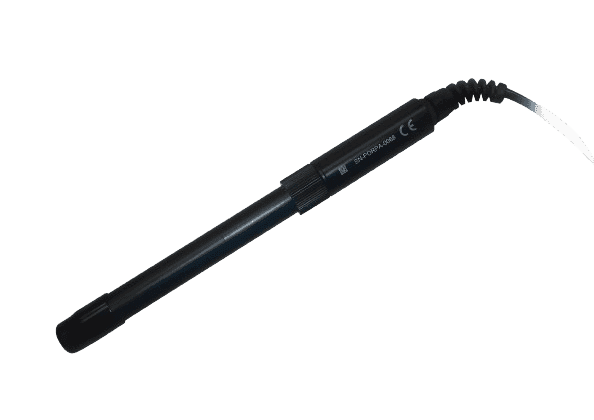
ORP is measured using an ORP sensor (electrode) connected to a Waboost generator, with our Cloud app you have full control over the ORP range, once ORP points are set ozone dosing will be performed automatically.
Components of an ORP probe:
Measuring electrode (usually platinum or gold)
Reference electrode (silver/silver chloride)
Electrolyte bridge
The sensor measures the voltage difference created by electron transfer reactions occurring at the electrode surface.
This voltage is reported as millivolts (mV).
6. What an ORP sensor actually measures
An ORP probe does not measure individual chemicals.
Instead, it measures:
“The tendency of the water to either accept or donate electrons.”
This makes ORP:
Very powerful (holistic measurement)
Very sensitive to changes in water chemistry
Because of this, ORP reacts immediately to:
Organic contamination
Biofilm release
Oxidant dosing
Microbial activity spikes
7. ORP vs pH – why both matter
ORP and pH are closely linked:
At lower pH, oxidants are more effective → ORP increases
At higher pH, oxidants weaken → ORP decreases
This is why ORP is often used together with pH to control:
Chlorination
Ozonation
Advanced oxidation systems
8. ORP in biological and agricultural systems
In systems involving animals or plants, ORP is a better indicator of water hygiene than disinfectant concentration alone.
For example:
Same chlorine dose → different ORP depending on organic load
Same DO → different ORP depending on microbial activity
This makes ORP especially relevant in:
Poultry drinking systems
Livestock water lines
Hydroponics
Aquaculture
Irrigation reuse systems
9. ORP and nanobubble technology
Nanobubbles influence ORP by:
Increasing stable dissolved oxygen & ozone
Enhancing oxidation reactions
Suppressing anaerobic microbial activity
Improving long-term redox stability without chemical overdosing
Unlike short-lived bubbles, nanobubbles:
Remain suspended
Continuously interact at the molecular level
Create sustained ORP improvement
This is why ORP is often a better performance indicator than DO alone when evaluating advanced oxygenation technologies.
10. Key takeaway
ORP is a direct, real-time indicator of how clean, biologically safe, and chemically active water is.
While DO tells you how much oxygen is present, ORP tells you:
Whether microbes can survive
Whether biofilms can form
Whether sanitation is effective
For modern water treatment and biological systems, ORP is not optional — it is essential.