Biofilm Control in Recirculating Aquaculture Systems (RAS)

Iscriviti alla nostra newsletter mensile sull'acqua
Potremmo inviarti un'email se abbiamo qualcosa di interessante da comunicare, scritto dai nostri professionisti dell'acqua
How RAS systems depend on — and fight — biofilm
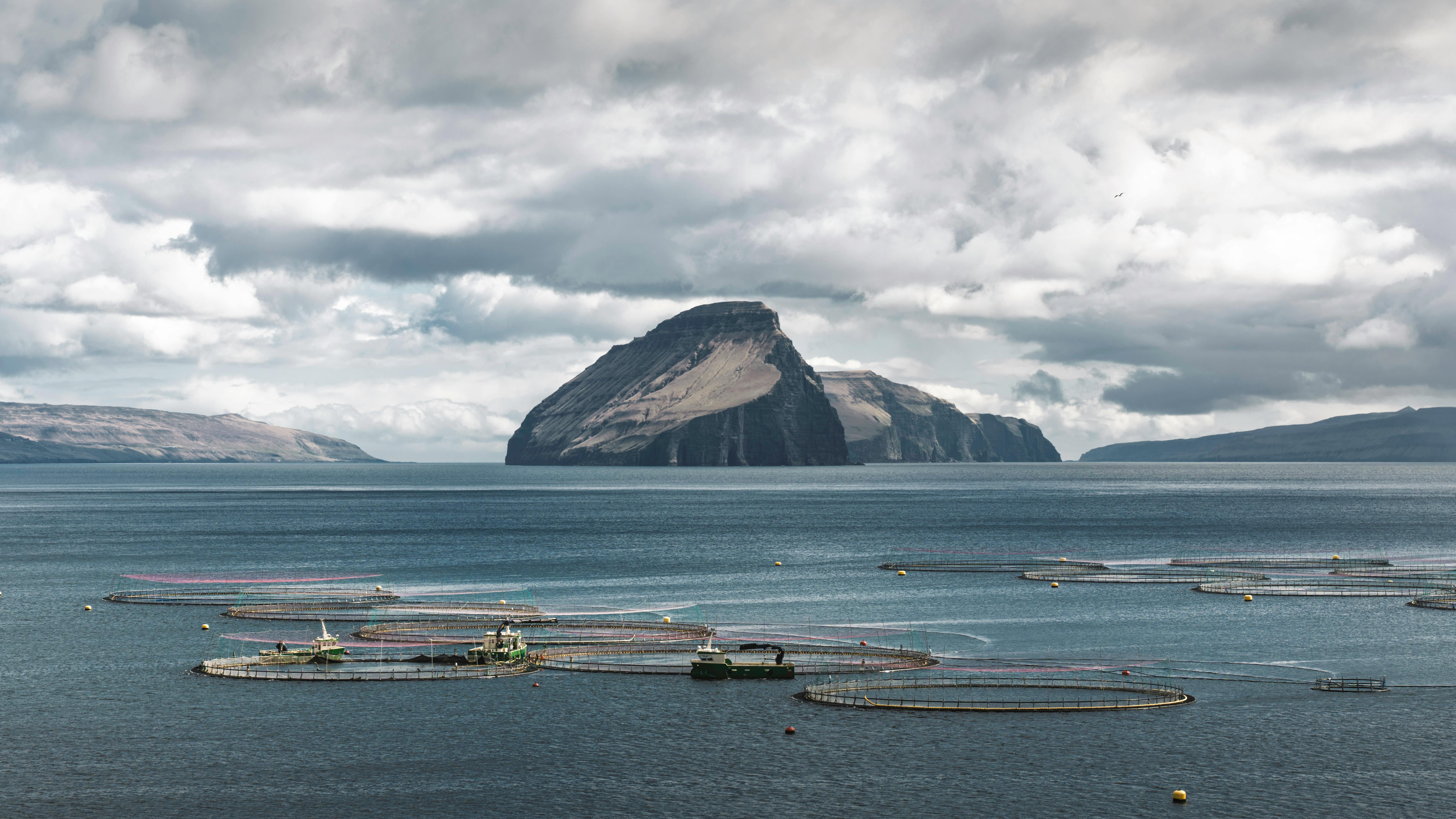
A RAS is defined by recirculating more than 90% of its system volume, exchanging less than 10% per unit time (Timmons, Ebeling, Wheaton, Summerfelt & Vinci, 2001) — in practice this means RAS use 90–99% less water than flow-through systems raising the same fish (Timmons & Ebeling, Recirculating Aquaculture, 2nd ed.). That reuse only works because a biofilter continuously strips out fish waste products, and the biofilter itself is a deliberately cultivated biofilm: a fixed surface (plastic media in a moving-bed bioreactor, a trickling filter, or fluidized sand) colonized by nitrifying bacteria — chiefly Nitrosomonas (ammonia → nitrite) and Nitrospira or Nitrobacter (nitrite → nitrate).
That's the one place in the system where more biofilm, up to a point, is good. Everywhere else, the same organisms and the same matrix-forming behavior described in our biofilm removal methods article become a maintenance and fish-health problem.
Where biofilm helps: the biofilter
Biofilter performance is a function of colonized surface area and biofilm maturity — a newly started biofilter can take several weeks to build enough nitrifying biomass to handle full stocking density, which is why RAS operators cycle new systems slowly and watch ammonia/nitrite closely during startup. Once mature, this biofilm is the system's core asset, and treatments aimed at biofilm elsewhere in the system need to be applied in a way that doesn't reach the biofilter and strip it out.
Where biofilm hurts: problem areas in RAS
Tank walls and dead zones
Low-flow corners, sumps and dead-leg pipework accumulate biofilm that sheds organic load back into the water column and can act as a standing reservoir for opportunistic fish pathogens. Aeromonas spp., Flavobacterium columnare (the cause of columnaris disease) and other bacteria have been documented in recirculating aquaculture environments and associated with biofilms.
See:
UF/IFAS Extension, "Fish Health Management Considerations in Recirculating Aquaculture Systems — Part 2: Pathogens":
https://ask.ifas.ufl.edu/publication/FA100"Identification of Bacterial Pathogens in Biofilms of Recirculating Aquaculture Systems":
https://doi.org/10.1300/J030v13n01_11
The latter study specifically investigated biofilms in seven freshwater and two saltwater RAS facilities and identified fish-associated pathogenic bacteria including Photobacterium damsela, Vibrio spp. and Aeromonas hydrophila. Biofilms can therefore function as reservoirs for pathogenic bacteria in RAS, although this should not be interpreted to mean that all RAS biofilms are pathogenic.
UV disinfection units
RAS commonly uses UV as a final disinfection barrier. Biofilm and mineral fouling on the quartz sleeve surrounding the UV lamp reduces UV transmittance, and disinfection dose drops sharply as transmittance falls — a fouled sleeve can silently underperform while the system still reports the lamp as "on." Regular sleeve inspection and cleaning is standard RAS maintenance practice for this reason.
Off-flavor compounds: geosmin and MIB
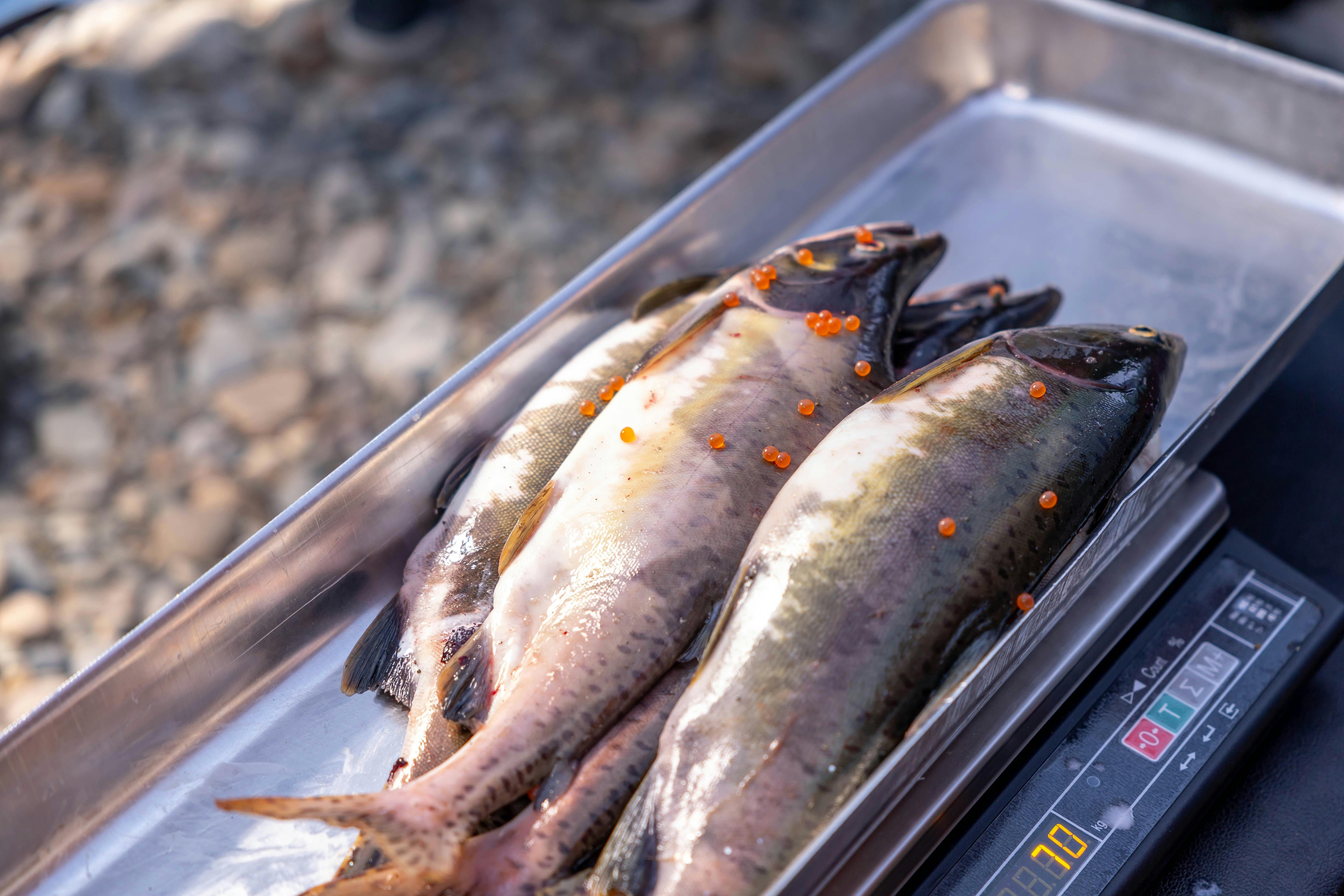
Certain biofilm-forming actinomycetes and cyanobacteria produce geosmin and 2-methylisoborneol (MIB), the compounds responsible for the "muddy" or "musty" off-flavor that's a well-documented problem in RAS-raised salmon, tilapia, catfish and other species.
Both compounds are detectable in water at very low concentrations — around 0.015 µg/L for geosmin and 0.035 µg/L for MIB — and in fish flesh at roughly hundreds of nanograms per kilogram. In Atlantic salmon specifically, sensory thresholds of 44–500 ng/kg for geosmin and above 900 ng/kg for MIB have been reported.
Because fish absorb these compounds from the surrounding water, standard practice is a "depuration" period — days to weeks in clean, geosmin/MIB-free water with feed withheld — before harvest. One Atlantic salmon RAS study found fish dropped below taste and odor threshold after up to 11 days, though the required duration depends on water temperature, fish fat content, and how contaminated the fish and depuration water were to start with.
Pathogen harborage and biofilm sloughing
A sudden slough of biofilm — from a flow change, a cleaning event, or a temperature swing — can release accumulated biomass and organic material into the water column. In fixed-film biofilters, physical disturbance can also affect nitrifying communities and contribute to transient water-quality instability. Operators typically watch for changes in ammonia, nitrite, dissolved oxygen and turbidity after mechanical disturbance to filter media.
Managing biofilm selectively
The core operating principle: treatments should target biofilm on tank surfaces, pipework, sumps and pretreatment equipment, while protecting the biofilter itself.
Mechanical cleaning — brushing, flushing dead legs, sleeve wiping — is effective on accessible hard surfaces and is standard practice for UV sleeves and tank walls, but does nothing for the biofilter and shouldn't be applied there.
UV pretreatment — reduces microbial load in the water before it reaches tanks, indirectly slowing biofilm formation downstream, without contacting the biofilter media directly.
Ozone — can be applied continuously in-line rather than as a batch or shutdown treatment. Water is dosed in a dedicated contact chamber, sometimes combined with a low-head oxygenator or fine-bubble diffusers, placed downstream of the biofilter in the treatment train — mechanical filtration → biofiltration → degassing → ozone/UV → oxygenation → back to tanks — so the biofilter isn't directly exposed to the dosing point.
A contact/off-gas chamber then removes residual ozone before treated water returns to the tanks, since residual ozone is toxic to fish. Dosing can be controlled using ORP as an operational proxy, although ORP should not be treated as a direct measurement of dissolved ozone concentration.
Research on Atlantic salmon parr RAS has found biofilter microbial communities can be relatively resistant to conservative ozone exposure compared with the free-water microbial community. This means placement in the flow path and conservative, water-quality-oriented dosing are important when ozone is used in a RAS.
Localized nanobubble treatment — see below.
Where nanobubbles fit in RAS
Oxygen and ozone nanobubbles behave differently enough in RAS to be worth separating.
Peer-reviewed work on ozone nanobubbles has found reductions in pathogenic bacteria, including Aeromonas hydrophila, in freshwater at doses reported as safe for Nile tilapia. One study reported a 10-minute exposure at roughly 2–3 × 10⁷ nanobubbles/mL.
However, a separate rainbow-trout hatchery study found that microbial community diversity in the rearing water shifted downward as ozone nanobubble intensity increased. This reinforces the importance of dose and placement rather than treating the presence of nanobubbles as inherently beneficial or harmful.
The same placement logic applies to ozone dosing generally: keep the treatment point downstream of the biofilter in the flow path where appropriate, and dose conservatively rather than treating the whole system uniformly.
Oxygen nanobubbles are a different case — they don't carry the same oxidant risk to nitrifying biomass.
One reported commercial RAS case at Lødingen Fisk, a Norwegian facility, attributed a 70% reduction in nitrite accumulation and more than 60% improvement in ammonia nitrification rates to oxygen nanobubble use. The figures were reported through nanobubble manufacturer Moleaer as an industry case study rather than independent peer-reviewed research, so they should be treated as a single vendor-reported case rather than a general benchmark.
Waboost's nanobubble generators are built for continuous, in-line operation, which fits this kind of targeted, ongoing treatment better than a periodic shock dose.
Practical monitoring
Because biofilter health and unwanted biofouling both show up first as water-chemistry drift, continuous monitoring can catch problems well before they become visible.
Tracking dissolved oxygen, ammonia and ORP with Waboost sensors and reviewing trends in Waboost Cloud lets an operator distinguish a slow biofilter maturation curve from a sudden water-quality disturbance, and identify changes before they become a larger fish-health or system-performance problem.
FAQ
Will removing biofilm in my RAS harm my biofilter?
It can, if treatment reaches the biofilter media. The nitrifying biofilm in the biofilter is deliberately cultivated and should be left alone — biofilm control efforts should target tank walls, pipework, sumps and UV units instead, not the filter itself.
What causes musty or muddy-tasting RAS-raised fish?
Most commonly geosmin and 2-methylisoborneol (MIB), compounds produced by certain microorganisms including actinomycetes and cyanobacteria. Fish can absorb these compounds from the water, and a depuration period in clean water before harvest is commonly used to reduce their concentration in fish tissue.
Can I use the same disinfection approach everywhere in my system?
No — what works on a tank wall or a UV sleeve, such as mechanical cleaning or targeted oxidants, would damage the biofilter if applied there. RAS biofilm management has to be location-specific.
How do I know if my UV unit is losing effectiveness to biofilm fouling?
A fouled quartz sleeve reduces UV transmittance without necessarily showing up as an obvious fault — the lamp can appear to be working while delivering less effective UV exposure than intended. Scheduled sleeve inspection and cleaning, rather than waiting for a visible problem, is therefore an important precaution.